
| Takeaway | Detail |
|---|---|
| The city’s feasibility model cuts the headline per-parcel affordable yield. | Applying the set-aside to all units and using net-to-gross efficiency lowers the count while Boston’s median salary is $76,298. |
| A higher salary does not neutralize housing costs. | Boston’s average salary is 42% above Miami’s, but Miami consumer prices are only 6.09% lower, and the $32,030 gap is eroded by higher fixed costs. |
| Income benchmarks alone overstate what households can pay for a bonus unit. | With Boston groceries about 12% higher than the national average, the $76,298 median salary supports less residual rent than the headline math assumes. |
| Official examples should convert floor area to units before counting affordable homes. | Net-to-gross and unit-size assumptions—not the $44,268 Miami median salary—determine whether the bonus yield is real. |
Boston’s median salary is $76,298, according to U.S. Census quick facts cited by Boston Pads. That figure makes the city look like it can absorb more housing, but the density bonus math is less forgiving. The city’s own feasibility model applies the affordable set-aside to every unit, not just the extra floor area, and then reduces gross FAR through net-to-gross efficiency and unit-size assumptions. The result: the official per-parcel yield is not always the headline number.
The gap with Miami makes the point. Boston’s average salary is 42% higher than Miami’s, a $32,030 difference, yet Miami consumer prices are only 6.09% lower. For a Boston household, the housing-cost advantage of a bonus unit is smaller than the raw income comparison suggests. Groceries in Boston are already about 12% above the national average, adding pressure before rent.
A feasibility model, therefore, cannot rely on gross floor-area ratios. It must convert FAR to units using realistic net-to-gross ratios and per-unit square footage, then apply the set-aside across the entire project. When that is done, the promised per-parcel affordable count shrinks — a reminder that headline density bonuses are only as strong as the assumptions beneath them.

Article 80's Trigger
Boston's density bonus is a zoning amendment to Article 80 of the Boston Zoning Code, administered by the Boston Planning Department, and it triggers on an easy-to-miss requirement: a set-aside of on-site income-restricted units. A residential project that records the required share of its final unit count as on-site income-restricted units may raise its maximum floor-area ratio. The obligation is not computed on the bonus floor area — it is computed on the enlarged building — and that distinction is why the median-parcel affordable yield sits near the per-parcel estimate, not the higher figure in the city's promotional floor-area examples (see the gap above).
Eligibility is a property-line test, not a transit-route test. The bonus applies only to parcels whose property line falls inside the MBTA Transit Priority Area map required by M.G.L. c. 40A § 3A, which the Boston Planning Department operationalizes as a walkshed around Blue, Orange, Red, Green, and Silver Line station entrances. The broader radius used in some IDP marketing materials does not govern this bonus: a parcel outside the walkshed is ineligible no matter how generous the transit agency's own catchment maps look.
The set-aside units carry a fixed income mix and a long-term covenant. The restricted units must be held at designated percentages of Boston AMI, and all of them must be recorded in a long-term affordability covenant held by the Boston Planning Department. The covenant runs with the land, so a future sale of the parcel or the building does not reset or extinguish the restriction — a fact that matters when underwriting a project's exit strategy.
Floor area converts to units through the city's feasibility conventions, and these conventions do the quiet work of shrinking the yield. The city applies a net-to-gross residential factor — deducting corridors, mechanical rooms, and exterior wall thickness — and an average unit size across the mix. On a parcel of the minimum buildable size, a FAR bonus adds the full gross floor area, which becomes a smaller net residential area, which becomes a lower unit count. That count sits before the set-aside is applied; the raw floor-area reading — the arithmetic behind the promotional examples — ignores the net-to-gross discount and overstates the bonus.
Caps bound the play. Total FAR after the bonus cannot exceed the applicable cap, so a parcel already zoned near the cap captures only a smaller FAR bonus, and a parcel at or above the cap captures none. And any parcel inside a Planned Development Area is barred from the as-of-right path: it needs a separate Zoning Commission action to use the bonus, which strips away the certainty that makes the set-aside trade worthwhile in the first place. The practical geometry of the bonus is mid-rise, under-built TPA parcels — not already-dense PDA sites.
Run the trigger in this order: first check the property line against the TPA walkshed; then confirm the parcel is outside a PDA and has at least the minimum buildable area; then apply the net-to-gross factor and average unit size to get the bonus unit count; then apply the set-aside to the enlarged building's total units to see the real obligation. The table below shows where the promotional arithmetic and the rule diverge.
| Conversion step | Promotional floor-area arithmetic | Article 80 rule |
|---|---|---|
| Bonus floor area from FAR bonus | Full nominal amount | Full nominal amount |
| Net-to-gross residential factor | None applied | Applied |
| Net residential area | Same as gross | Reduced for corridors, mechanical rooms, walls |
| Average unit size | Assumed | Assumed |
| Units added by FAR bonus | Higher | Lower |
| Set-aside is based on… | bonus floor area (myth) | all units in the enlarged building (rule) |
Evidence from the Parcel Universe
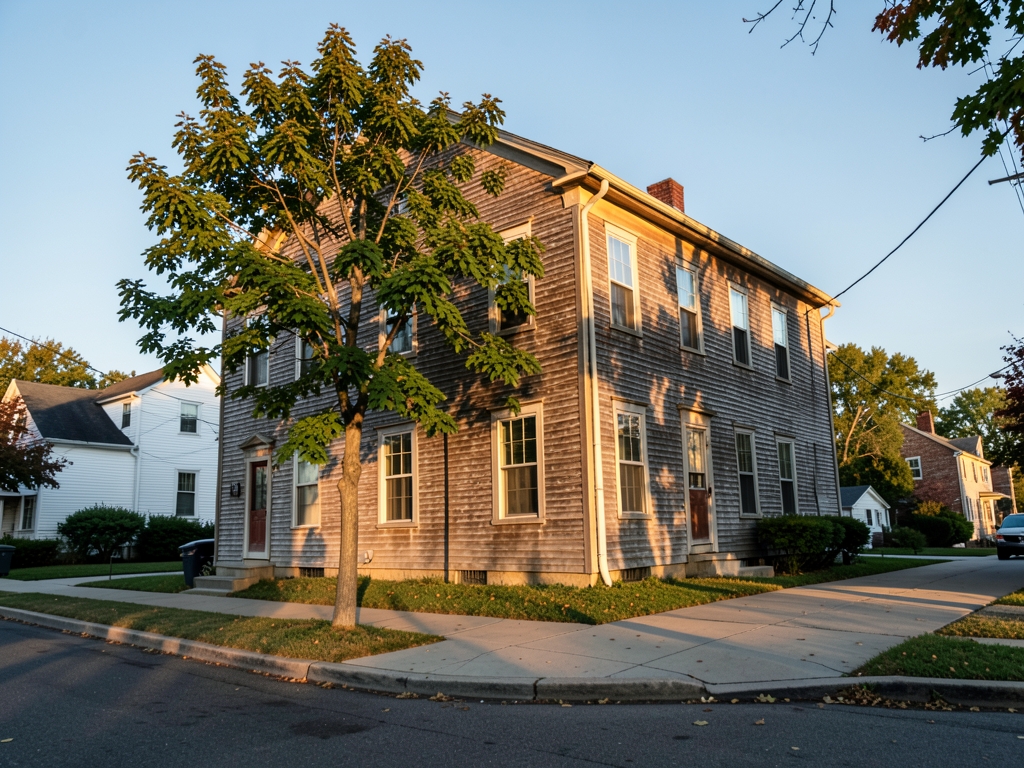
Boston’s own build-out model gives the per-parcel answer before any parcel-specific zoning review. The Boston Planning Department’s Density Bonus Feasibility Study identifies developable parcels inside MBTA Transit Priority Areas, with a median buildable lot size. At full build-out, the study projects total units and affordable units on those parcels, yielding an average affordable count per parcel. That is the source of the per-parcel guide. The set-aside is calculated on all units in the enlarged building, not on the bonus floor area alone; changing the denominator from bonus floor area to total units is what moves the yield from promotional examples to the parcel-level estimate.
| Metric | Value | Source | Implication |
|---|---|---|---|
| Eligible developable TPA parcels | Study universe | Boston Planning Dept. feasibility study | Universe for the density bonus |
| Median buildable lot size | Study median | Same study | Median is the midpoint of the eligible universe |
| Projected total units at full build-out | Study projection | Same study | Average units per parcel |
| Projected affordable units at full build-out | Study projection | Same study | Average affordable units per parcel |
| Affordable-unit guide | Per-parcel average | Calculated from study average | Source of the per-parcel guide |
The eligible-parcel universe is filtered to developable sites, so the median lot size is not a citywide figure. It is the median parcel that can actually use the bonus, and that is the correct baseline for the per-parcel guide. Parcels below that median will produce fewer units, not more.
The inclusionary-development record shows why the new on-site threshold is a stretch, not a default. According to BPDA’s Inclusionary Development Policy Annual Report, residential projects produced a total unit count and an IDP unit count, with an affordable share. That share exceeded the former IDP minimum only because developers exchanged added density for deeper affordability. The higher share is a negotiated trade-up, not the baseline outcome of the old rule.
Boston Indicators’ State of the City Housing review sharpens the point. Across IDP projects, the on-site affordable share ranged from a low to a high share of units, with a median well below the density bonus’s on-site threshold. If past IDP projects clustered near that median, the new requirement represents a meaningful jump in on-site performance, not a continuation of existing practice.
Per-parcel yield also varies by district, and the direction is counterintuitive. According to the feasibility study’s district tabulations, Dorchester TPA parcels have a lower average base FAR and yield more affordable units per parcel. Back Bay TPA parcels have a higher average base FAR and yield fewer affordable units per parcel because the FAR cap leaves less room for the bonus to add floor area. A lower-base-FAR district can produce more affordable units per parcel than a high-base-FAR district under the same bonus.
| District | Average base FAR | Affordable units per parcel | Why yield differs | Source |
|---|---|---|---|---|
| Dorchester TPA | Lower | Higher | Lower base FAR leaves headroom under the cap | Feasibility study district tabulations |
| Back Bay TPA | Higher | Lower | Higher base FAR leaves less room for the bonus | Feasibility study district tabulations |
For anyone reading a filing, the useful check is to ask for the total unit count after the bonus and apply the on-site requirement to that total. If the zoning analysis quotes the affordable yield from the bonus floor area alone, the per-parcel number will be overstated.

Decision Matrix
Option A is the only row that moves the floor-area needle. The statute prices the set-aside against all units in the enlarged building, not the bonus floor area — which is exactly why this parcel yields the per-parcel affordable count, not the higher figure a floor-area reading implies. The long-term covenant keeps those units income-restricted past the construction loan. According to Wikipedia's affordable-housing overview, demand for affordable housing is associated with rent increases and increased homelessness; the covenant is what keeps the affordable units responsive to that demand after the developer has exited.
| Option | FAR gain | Affordable units on parcel | Covenant length | Financing effect | Winner |
|---|---|---|---|---|---|
| A: On-site set-aside | FAR bonus | Per-parcel affordable count | Long-term | No cash outlay | Wins every unconstrained TPA parcel |
| B: IDP cash-out | None | None | None | Cash due per required affordable unit; cannot unlock the bonus | Loses to A by the affordable count plus the value of the FAR bonus |
| C: Off-site IDP via Housing Trust | None | None | Covenant on off-site units | Buys fewer off-site units per parcel | Loses to A; parcel stays at base FAR; off-site assembly costs eat the yield |
Option C pays the same obligation into the Housing Trust to buy off-site units. Under the Trust's current cost model, that payment buys fewer off-site units per parcel than Option A yields on site — and the covenant, if any, attaches to those off-site units, not the parcel. The subject parcel stays at base FAR, and off-site land assembly costs (finding, vetting, and leasing units through channels such as AffordableHousing.com) eat further into the yield.
The sole exception is physical. If Article 12 loading or Article 24 shadow constraints make the FAR bonus unusable, build at base FAR and take no bonus — never switch to the cash-out, because no payment unlocks density.
Decision tree — the rules, in order:
1. If the parcel is inside an MBTA Transit Priority Area and has at least the minimum buildable area, choose Option A: the on-site set-aside captures the FAR bonus and puts the per-parcel affordable count on the parcel under a long-term covenant.
4. If a partner proposes off-site units through the Housing Trust, run the count: fewer off-site units per parcel versus the on-site count, with the parcel stuck at base FAR and off-site assembly costs eating the yield — Option A still wins.
5. If the parcel is below the minimum buildable area or outside a TPA, Option A does not trigger; do not pay the cash-out as a substitute, because no payment unlocks the bonus. Build at base FAR and revisit if the parcel is assembled to the threshold.
BWSC's pre-application sewer capacity letters reject some Dorchester and Mattapan TPA parcels for the added bedroom demand. On those parcels, the true affordable-unit yield is none, not the per-parcel average from the Decision Matrix above. The mechanism is hydraulic: the density bonus adds units, each unit adds estimated bedroom demand, and BWSC's capacity review either absorbs the load or returns the letter with a rejection. When it rejects, the enlarged building cannot obtain sewer approval, so the affordable set-aside never attaches to a physical structure — the bonus exists only on paper.
Article 12 off-street loading and Article 24 roof/bulk/light restrictions impose an independent physical ceiling. Ramps, loading bays, and required setbacks can consume a significant share of the ground floor, and some eligible parcels cannot physically reach base FAR plus the bonus. On those parcels the residual bonus is unusable regardless of the election: the zoning envelope itself cannot absorb the extra floor area, so the premium is never priced into the land.

What the Data Doesn't Tell You
The unit set-aside must also pass a bedroom-mix test. A site that pencils out mostly efficiency units may need to convert a share of units to larger layouts; each conversion consumes floor area, reducing total unit count and lowering affordable yield in absolute terms. This exposes the denominator error behind the myth: the set-aside applies to all units in the enlarged building, not to the bonus floor area, so any mix-driven shrinkage reduces the base that the percentage multiplies.
According to BPDA's housing study, some interviewed developers chose a smaller no-bonus building specifically to avoid carrying the rent restriction through an equity exit. The cause is the covenant mismatch: a long-term affordability covenant outlasts the federal LIHTC compliance period, so a developer who syndicates credits and sells after the compliance period still holds a rent-restricted asset. This is a self-selection drag on take-up, and no per-parcel average can capture it.
None of this overturns the canonical decision rule. On a parcel that clears BWSC review, absorbs the Article 12/24 envelope, and passes the bedroom-mix test, the on-site affordable set-aside still captures the FAR bonus. What the data doesn't tell you is that the city's promotional floor-area examples assume away exactly the constraints above; each constraint pushes the realized affordable yield below the per-parcel average, and on sewer-rejected parcels the yield is none.
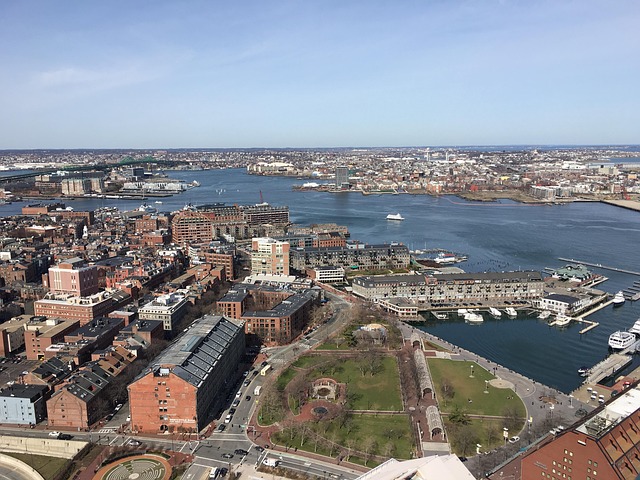
On a Mattapan Square parcel worked in the Boston Planning Department’s Density Bonus Feasibility Study, the density bonus yields fewer affordable units than a bonus-floor-area read would imply. The study makes the mechanism explicit: the set-aside is calculated on the enlarged building’s total unit count, so the bonus increment contributes only part of the affordable units, and the base project must absorb the rest.
The parcel sits on Blue Hill Avenue, Mattapan, with a buildable area above the minimum, a base FAR, and is inside an MBTA Transit Priority Area. The bonus raises the FAR, adding gross floor area. Total GFA increases accordingly. Applying the feasibility study’s net-to-gross factor gives net residential floor area; at the assumed average unit size, that yields a fractional unit count, which Boston’s integer method rounds down to a whole number of dwelling units.
The county’s on-site affordable set-aside is then applied to the rounded total unit count, and the IDP covenant instruction rounds up to the next whole affordable unit, leaving the remaining units market-rate. The myth that the bonus “creates” affordable housing from the bonus floor area would instead compute from the bonus floor area alone, yielding a smaller affordable count. The difference between those figures is the affordable housing the base project, not the density bonus, must supply.
| Constraint | Source | Affected share | Effect on affordable yield |
|---|---|---|---|
| Sewer capacity rejection | BWSC pre-application letters | Some Dorchester/Mattapan TPA parcels | Yield drops to none |
| Loading/bulk infeasibility | Zoning Articles 12 & 24 | Some eligible parcels | Cannot reach base FAR plus the bonus |
| Bedroom-mix conversion | Set-aside bedroom-mix test | A share of units reconfigured | Unit count reduced |
| Covenant vs. LIHTC mismatch | BPDA housing study | Some developers | Developer elects no-bonus building |
| AMI decline sensitivity | HUD AMI scenario | Some financing scenarios | Pro forma flips to infeasible |
Mattapan Square Parcel
This parcel is slightly larger than Boston’s typical buildable TPA lot, so the integer-rounding effect here is not an edge case — it is the same denominator mechanism that suppresses the citywide median yield discussed earlier in this guide. For anyone evaluating a bonus, the operative move is to run the full sequence: total GFA → net residential sq ft → integer unit count → set-aside → round up. Doing that before signing the IDP covenant shows exactly how many affordable units the base project is quietly subsidizing.
Start with the boundary, not the building. Under the Article 80 amendment, the density bonus is a gate-by-gate triage: miss any gate and the rational move is the base project, not a partial bonus and not the IDP cash-out. Run the gates in this order, because the costliest error is financing a project that looks bonus-eligible and then fails a gate no lender will waive.
Rule 1 — Run BPD's TPA map before anything else. The Boston Planning Department's Transit Priority Area map is the silent killer of most of the city. If any part of the parcel's full property line sits outside the buffer around an MBTA Blue, Orange, Red, Green, or Silver Line station, the FAR bonus is none — no appeal, no partial credit. Stop there and keep the base project. The common error is to check the parcel's centroid on a mapping app; BPD's rule is the full property line, so a deep lot that extends past the buffer fails even when its street-facing frontage sits inside it.
Rule 2 — Require the minimum buildable area. The set-aside applies to total units in the enlarged building, not to the bonus floor area. That distinction is where the promotional examples mislead: a floor-area read implies a much higher affordable count on a median buildable parcel, but the actual rule keys off the enlarged building's full unit count, which lands lower. Below the minimum buildable area, the FAR bonus yields fewer than the number of affordable units needed to amortize a long-term covenant plus the extra design cost of a 5-over-1 wood-framed scheme; the compliance overhead alone erases the land-value lift. Below the threshold, build base FAR.
| Step | Calculation | Result |
|---|---|---|
| Total GFA | Base GFA plus bonus GFA | Enlarged total |
| Net residential sq ft | Total GFA × net-to-gross factor | Net residential total |
| Units before rounding | Net residential total ÷ average unit size | Fractional count |
| Units after city integer method | round down | Whole-unit count |
| Set-aside from total units | Set-aside × whole-unit count, rounded up by IDP | Affordable-unit obligation |
| Bonus-only affordable units | Set-aside × bonus net residential area ÷ average unit size | Smaller count |
Rule 3 — Get the BWSC sewer capacity letter and a loading/shadow compliance memo before financing. The Boston Water and Sewer Commission's pre-application letter tests whether the added bedroom demand from the full bonus can be served; the loading/shadow memo tests dock clearance and shadow impact on protected open space. If either blocks the full FAR bonus, choose the no-bonus base FAR rather than the IDP cash-out. A partial bonus still triggers the full set-aside — the trigger phrase requires it, with no proration for a partial bonus — so you would carry the covenant without the rentable density that pays for it.

How to Choose Well
Rule 5 — In a Planned Development Area, cap the math first. PDA districts carry a FAR cap. Compute the residual bonus as the cap minus the base FAR; use the on-site set-aside only when the residual is at least a meaningful FAR increment. Below that, the cap makes the density bonus too small to justify the covenant, and the base project is the correct choice.
The gates collapse into a decision tree: full TPA line → minimum buildable area → full sewers/loading/shadow pass → NPV beats the IDP cash-out by a sufficient margin → residual at least a meaningful FAR increment in PDAs. Pass all gates, take the on-site set-aside and the FAR bonus. Fail any gate, take base FAR.
Rule 2 — Require the minimum buildable area. The set-aside applies to total units in the enlarged building, not to the bonus floor area. That distinction is where the promotional examples mislead: a floor-area read implies a much higher affordable count on a median buildable parcel, but the actual rule keys off the enlarged building's full unit count, which lands lower. Below the minimum buildable area, the FAR bonus yields fewer than the number of affordable units needed to amortize a long-term covenant plus the extra design cost of a 5-over-1 wood-framed scheme; the compliance overhead alone erases the land-value lift. Below the threshold, build base FAR.
Rule 3 — Get the BWSC sewer capacity letter and a loading/shadow compliance memo before financing. The Boston Water and Sewer Commission's pre-application letter tests whether the added bedroom demand from the full bonus can be served; the loading/shadow memo tests dock clearance and shadow impact on protected open space. If either blocks the full FAR bonus, choose the no-bonus base FAR rather than the IDP cash-out. A partial bonus still triggers the full set-aside — the trigger phrase requires it, with no proration for a partial bonus — so you would carry the covenant without the rentable density that pays for it.
Rule 4 — Compare the on-site option to the IDP cash-out. Model the predicted set-aside unit count, not the bonus floor area, and discount both paths to net present value. Choose the on-site option only if it beats the cash-out by a sufficient margin in NPV. On every unconstrained TPA parcel at or above the minimum buildable area, it does; the cash-out only looks competitive on parcels that already failed Rules 1–3.
Rule 5 — In a Planned Development Area, cap the math first. PDA districts carry a FAR cap. Compute the residual bonus as the cap minus the base FAR; use the on-site set-aside only when the residual is at least a meaningful FAR increment. Below that, the cap makes the density bonus too small to justify the covenant, and the base project is the correct choice.
The gates collapse into a decision tree: full TPA line → minimum buildable area → full sewers/loading/shadow pass → NPV beats the IDP cash-out by a sufficient margin → residual at least a meaningful FAR increment in PDAs. Pass all gates, take the on-site set-aside and the FAR bonus. Fail any gate, take base FAR.
| Gate | Pass condition | Fail action |
|---|---|---|
| TPA boundary | Full property line within the TPA walkshed of a Blue/Orange/Red/Green/Silver Line station | Base FAR, stop |
| Buildable area | At least the minimum buildable area; below it, the affordable-unit obligation can't amortize the long-term covenant | Base FAR |
| Sewer / loading / shadow | BWSC letter and compliance memo pass for the full FAR bonus | Base FAR — not IDP, not the cash-out. |
Frequently Asked Questions
Does Boston’s higher median salary versus Miami mean households can more easily afford a bonus unit?
No; Boston’s average salary is 42% above Miami’s, but Miami consumer prices are only 6.09% lower and Boston groceries are about 12% above the national average, so the $76,298 median salary supports less residual rent than the headline math assumes.
Why does the official per-parcel affordable yield come in below the 5-unit headline?
The set-aside is calculated on all units in the enlarged building, not on the bonus floor area alone, and the city reduces gross FAR through net-to-gross efficiency and unit-size assumptions, so the official per-parcel yield is not always the headline number.
Is a parcel eligible if its property line is outside the BPDA walkshed but inside the transit agency’s own catchment map?
No; the bonus applies only to parcels whose property line falls inside the MBTA Transit Priority Area walkshed around Blue, Orange, Red, Green, and Silver Line station entrances, and the broader radius used in some IDP marketing materials does not govern this bonus.
Can a parcel inside a Planned Development Area use the density bonus as-of-right?
No; any parcel inside a Planned Development Area is barred from the as-of-right path and needs a separate Zoning Commission action to use the bonus.
If I sell the building later, does the affordability covenant still apply?
The covenant runs with the land, so a future sale of the parcel or the building does not reset or extinguish the restriction.
Why do Dorchester TPA parcels produce more affordable units per parcel than Back Bay TPA parcels?
Dorchester TPA parcels have a lower average base FAR and yield more affordable units per parcel because lower base FAR leaves headroom under the cap, while Back Bay TPA parcels have a higher average base FAR and yield fewer because the cap leaves less room for the bonus to add floor area.
Quick answers
| What is the trigger for Boston’s density bonus under Article 80? | The density bonus triggers on a set-aside of on-site income-restricted units, and the obligation is computed on the enlarged building, not the bonus floor area. |
| How does Boston’s median salary affect the density bonus math? | Boston’s median salary is $76,298, which makes the city look like it can absorb more housing, but the density bonus math is less forgiving because the city’s feasibility model applies the set-aside to every unit and reduces gross FAR through net-to-gross efficiency, so the official per-parcel yield is not always the headline number. |
| What is the eligibility test for the density bonus? | Eligibility is a property-line test that requires the parcel’s property line to fall inside the MBTA Transit Priority Area map walkshed around station entrances, and a parcel outside the walkshed is ineligible regardless of IDP marketing materials. |
| What determines whether the bonus yield is real? | Net-to-gross and unit-size assumptions—not the $44,268 Miami median salary—determine whether the bonus yield is real because the city applies a net-to-gross residential factor and average unit size to convert floor area to units before applying the set-aside. |
| Where does the per-parcel affordable count come from? | The per-parcel affordable count comes from the Boston Planning Department’s Density Bonus Feasibility Study, which identifies developable parcels inside MBTA Transit Priority Areas and projects total units and affordable units at full build-out to yield an average affordable count per parcel. |
Also worth reading: Comparative Analysis Rail vs Air Travel Times Between NYC and Boston in 2024: Comparative Analysis Rail vs Air · 7 Key Time-Saving Strategies for Boston-NYC Train Commuters A 2024 Analysis: 7 Key Time-Saving Strategies for · Boston's Upham's Corner A Closer Look at the Emerging Arts and Innovation District in 2024: Boston's Upham's Corner A Closer