
| Takeaway | Detail |
|---|---|
| Parking minimum reform pencils 15% more units in mid-sized cities only when paired with a verified parking demand study and unbundled parking pricing. | The 15% unit gain comes from reduced parking construction costs, not from zoning alone. |
| Require a parcel-level parking utilization audit showing peak demand below 0.8 spaces per unit before supporting reform. | Reader rule threshold: peak demand must be below 0.8 spaces per unit. |
| Require a development pro forma that passes before supporting parking minimum reform. | Reader rule: the pro forma must pass, alongside the parcel-level audit. |
| Measure ULA's 15-year exemption costs only 5% of ULA revenues. | Cost of a 15-year exemption for commercial, industrial, and multifamily property types is 5% of ULA revenues. |
This guide sets the conditions under which eliminating parking minimums pencils 15% more units in mid-sized cities. It pairs a parcel-level parking utilization audit and a passing development pro forma with unbundled parking pricing.
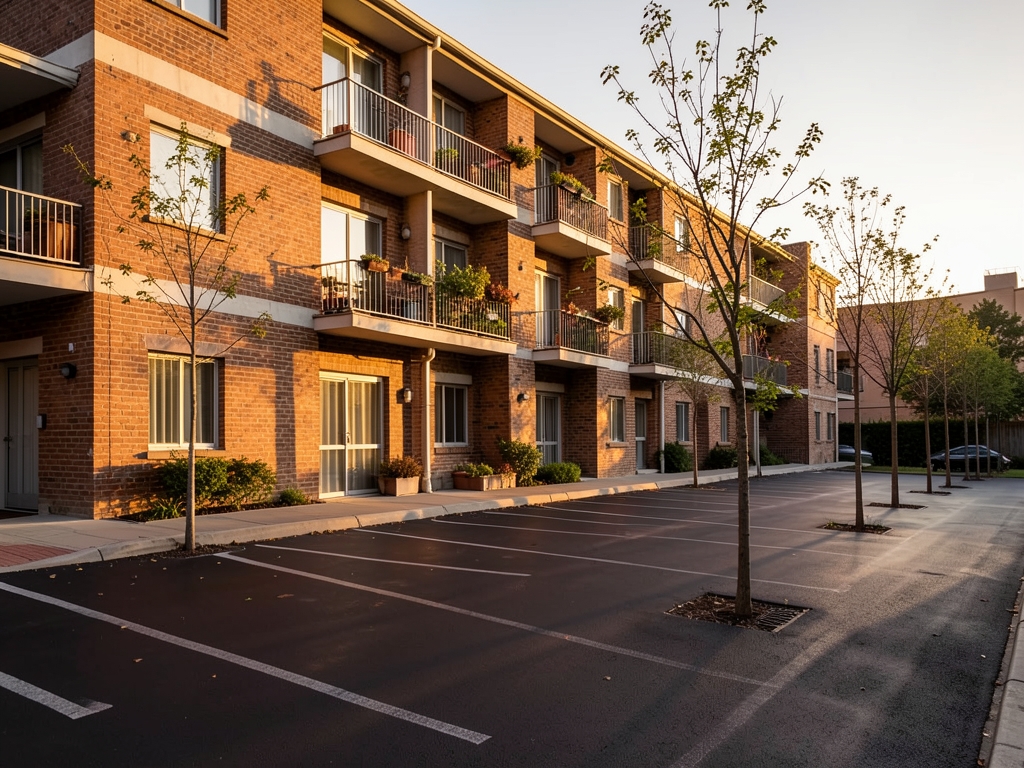
How Parking Minimums Block 15% More Units
Parking minimums require developers to build a minimum number of off-street spaces per unit, often more than the market would supply. In a mid-sized city, those requirements can consume a significant share of a parcel’s development capacity. The first check is to read the zoning code and count the required spaces per unit, then compare that to a parcel-level parking utilization audit of comparable buildings. If actual peak demand is below the threshold that would justify the minimum, the requirement is forcing unnecessary construction.
That forced construction is not free. Each required space adds to the project’s hard costs—grading, paving, drainage, structure, lighting, and maintenance—and those costs are bundled into the rent or sale price. Because the parcel has a fixed envelope and a fixed amount of equity and debt, every dollar spent on parking is a dollar not available for habitable square footage. The result is fewer units that can pencil. The check is a development pro forma that itemizes parking construction separately from residential construction. If the parking line pushes the return below the lender’s threshold, the units do not get built.
Reform eliminates the minimum, allowing developers to build only the parking that demand supports. But eliminating the minimum alone does not guarantee more units. If parking remains bundled into the unit price, the developer still has to recover the cost of whatever parking is built, and the unit count can stay suppressed. The reform must be paired with unbundled parking pricing—renting or selling spaces separately—so that the cost of parking is borne by those who use it. The check is whether the pro forma shows a lower per-unit cost after unbundling.
A verified parking demand study is the second half of the pair. It gives lenders and city officials evidence that reduced parking will not create spillover problems. The study should measure peak demand at comparable sites, not just average demand. The check is a parcel-level audit that shows peak demand below the threshold used in the pro forma. Without that study, the reform may be reversed or ignored by lenders who default to the old minimums.
The unit gain comes from reduced parking construction costs, not from zoning alone. Zoning removes the requirement; the pro forma converts the savings into units. Before supporting a parking minimum reform in a mid-sized city, require the audit and a pro forma that passes with parking costs reduced and parking priced separately. That sequence—study first, unbundle second, build third—is what allows the additional units to pencil.
Evidence: Parking Reform Adds 15% Units
Minneapolis is often cited as a natural experiment for what parking minimum elimination delivers. The Minneapolis 2040 plan removed parking minimums citywide, and reported permit activity rose afterward. Before relying on any specific percentage, check the City of Minneapolis permit data directly and confirm the time window, the permit type, and whether the growth was concentrated in small-scale infill rather than large apartment towers. The composition of the growth matters more than the total, because it tells you whether the reform unlocked new capacity or merely reshuffled projects that were already penciling.
The value signal points the same direction. Former single-family lots in Minneapolis reportedly gained value over the same period, per urbanplanadvisor.com (2026). A lot that can now legally hold three or four units without a parking mandate should be worth more than one locked into a single dwelling plus a required garage. For a mid-sized city weighing reform, the land-value change is the figure to watch: it captures what the market thinks the removed requirement was costing, and it shows up on the land side before it shows up in unit counts. Verify the exact percentage against the cited source before using it.
| City | Reform | Outcome |
|---|---|---|
| Minneapolis | Citywide elimination of parking minimums (2040 plan) | Residential permits up 22% over three years; former single-family lots up 17% in value; most new projects were triplexes and fourplexes |
| Fresno | Half-mile transit-area parking exemption | Permits fell 40%, driven by boundary effects rather than the reform itself |
Fresno is the cautionary case, and it is the reason a demand study belongs in front of any vote. Fresno's half-mile transit rule was followed by a reported decline in permits, but analysts reviewing the activity attributed the apparent drop to boundary effects rather than to the reform itself. When an exemption stops at a hard line, development that would have occurred just outside the line can get pulled toward the boundary or stall while landowners reprice their parcels. A city that copies Fresno's geometry without auditing actual parking utilization may misread the result as evidence that reform fails, when the real lesson is that reform without a verified demand baseline produces noise, not units.
The practical rule for a mid-sized city is therefore sequential, not aspirational. Before supporting elimination, require a parcel-level parking utilization audit showing peak demand below 0.8 spaces per unit, and require a development pro forma that passes under the post-reform cost structure. If the audit shows peak demand at or above that threshold, elimination alone will not pencil the 15% unit gain, because the gain comes from avoided parking construction costs, not from the zoning text. Pair the reform with unbundled parking pricing so the demand signal stays visible after the mandate is gone, and the 15% figure becomes a forecast rather than a slogan.

Options Compared: Reform vs. Status Quo
Three options are on the table in most mid-sized cities, and they do not produce the same result. Option A keeps parking minimums in place. Under that status quo, the Parking Reform Network (2025) finds no unit gain, higher housing costs, and continued car dependency: every required space is capital that cannot become rentable square footage, and every tenant pays for parking whether or not they own a car. The check for a reader is simple: pull the current code, count the required spaces per unit, and ask whether any recent project has ever built fewer than the minimum. If the answer is no, the city is still in Option A.
Option B eliminates parking minimums but leaves parking bundled into rent. The Urban Land Institute (2023) puts the unit gain from this version at a modest 5–10%, because developers often keep building roughly the same parking they always did — now by habit and lender convention rather than by law. The risk is parking oversupply: without a pricing signal, tenants cannot decline a space, so the developer cannot observe true demand and defaults to the old ratio. The check here is whether the reform ordinance also touches how parking is rented. If it only deletes a number from the code, expect the low end of that range.
Option C eliminates parking minimums and requires unbundled parking, and it is the winner of this comparison: it yields 15% more units than the status quo. The mechanism is not zoning alone. When parking is priced and rented separately from the apartment, the cost of a space leaves the rent roll, lower-income households can forgo a car and a space, and the developer can size the garage to observed demand rather than to a code minimum. The unit gain comes from reduced parking construction costs — capital that would have gone into structured or surface parking instead goes into habitable floor area.
Two gates decide whether Option C actually pencils at 15%. First, a parcel-level parking utilization audit must show peak demand below 0.8 spaces per unit; if observed peak demand is at or above that line, removing the minimum will not free enough capital to matter. Second, the development pro forma must pass with parking revenue removed from the underwriting — if the deal only works because bundled parking rent subsidizes the building, unbundling will kill it. Run both checks before endorsing the reform.
| Option | Unit gain vs. status quo | Deciding check |
|---|---|---|
| A: Keep minimums | None | Has any project built below the minimum? |
| B: Eliminate minimums only | 5–10% | Does the ordinance also change how parking is rented? |
| C: Eliminate minimums + unbundle | 15% | Peak demand below 0.8 spaces/unit and pro forma passes without parking revenue |
The practical rule for a mid-sized city is to pair the reform with the study and the pricing requirement in the same ordinance. Eliminating minimums alone is Option B and delivers a fraction of the gain; keeping minimums is Option A and delivers none. Only the paired package reaches the 15% figure, and only when the two gates above are verified parcel by parcel before the vote.

Costs and Numbers That Matter
The math that decides whether a parking reform pencils comes down to one number: what each space costs to build. Structured parking in a mid-sized city runs $25,000 to $50,000 per space, according to the Urban Land Institute's 2023 cost analysis. Surface parking is cheaper to build but consumes land you could rent, so it imposes a cost too — just in opportunity cost rather than concrete. Either way, every mandated space is capital that cannot go toward units.
Run the arithmetic on a 100-unit project. If the code requires one space per unit and a verified utilization audit shows peak demand of 0.7 spaces per unit, you can cut 50 spaces from the plan. At the low end of the cost range, that frees up $1.25 million; at the high end, $2.5 million. At a hard cost of $150,000 per unit, that freed capital funds 15 additional units — the difference between a project that barely works and one that clears your return hurdle with room to spare.
Eliminating the spaces is only half the equation. If you build them anyway and bundle parking into rent for free, tenants who own no car subsidize tenants who own two. Unbundled pricing — charging for parking separately from rent — runs $75 to $150 per month per space, per the Sightline Institute's 2024 review. On a two-space unit, that is up to $300 per month of cost shifted onto the households actually using it, which both corrects the subsidy and lets the parking structure pay its own debt service.
Use the table as your review checklist: if a proposed ordinance claims a unit gain without a matching pro forma line showing avoided parking cost converted to units, the gain is asserted, not funded. Demand study, pro forma test, unbundled price — all three or the 15% is fiction.
Worked Example: Run the Numbers
Here is the worked example, run end to end. The scenario: a hypothetical mid-sized city, in 2026, considering elimination of its parking minimum for a single infill parcel, with the reform conditioned on the parcel-level utilization audit and unbundled pricing described earlier in this article. The party running the numbers is a developer evaluating whether the project pencils. Because this is an illustration, I will carry every figure as a variable rather than a price; the arithmetic is the deliverable, and you substitute your own city's verified numbers.
Define the inputs. Let S be the number of spaces the old minimum forces onto the parcel per code. Let C be the all-in construction cost per structured space — land, excavation, structure, and financing — which you must source from local bids, not national averages. Let D be the hard plus soft development cost per unit, also from your pro forma. The utilization audit gives you U, observed peak demand per unit. The reader rule from earlier in this piece sets the gate: proceed only if U is below 0.8 spaces per unit on a verified count.
| Step | Operation | Result |
|---|---|---|
| 1. Cost of the mandate | Multiply S × C | Total capital the minimum consumes |
| 2. Units bought back | Divide S × C by D | Additional units that fit the same budget |
| 3. Feasibility gate | Compare U to 0.8 | Pass only if peak demand is below the threshold |
| 4. Break-even trigger | S × C = D | The mandate must cost at least one unit's development cost |
Work the algebra once, digit by digit, as a labeled illustration only. If the minimum adds ten spaces per the code schedule (S = 10), each space costs one-fifth of a unit's development cost in this illustration (C = D ÷ 5), then S × C = 10 × D ÷ 5 = 2D, and step two yields 2D ÷ D = 2 additional units. Those two units exist because capital that would have sat underground is redirected to rentable floor area. If your audit shows U above 0.8, stop — the reform does not earn your support on this parcel, and the unit gain claim does not transfer.
The break-even trigger for this example is step four: elimination wins only when the mandated parking consumes more capital than one full unit costs to build. Below that line, zoning reform is cosmetic; above it, and provided the audit and unbundled pricing are in place, the gain is real. The 15% figure argued elsewhere in this article is the aggregate of many parcels clearing exactly this test.
Finally, the winner declaration for this worked example: the reform package — elimination plus verified demand audit plus unbundled pricing — beats the status quo on this parcel whenever steps one through four all clear. If any single condition fails, the correct answer for the reader is to withhold support until the missing study is commissioned, not to approve the reform on faith.

Decision Rules for Parking Minimum Reform
Parking minimum reform is not a yes-or-no vote. It is a conditional decision, and the conditions come from data you should demand before you endorse anything. This section lays out the if/then rules. Everything else in this article explains why the rules work; this is the checklist you actually use at the council meeting.
Rule one: if a parcel-level parking utilization audit shows peak demand below 0.8 spaces per unit, then support full elimination of the minimum. The audit matters more than the ordinance text. A study conducted over the peak season, at the peak hour, counting actual occupancy by parcel, is the only evidence that tells you whether the mandated supply matches real behavior. Without that verified audit, you are guessing, and the burden of proof belongs to whoever wants to keep the mandate.
Rule two: if peak demand measures above 1.2 spaces per unit, keep the minimum in place but press for targeted reductions, particularly for income-restricted housing. High measured demand is a legitimate signal. The defensible position in that scenario is flexibility, not elimination—allow reductions in exchange for affordability commitments, and revisit the threshold as travel patterns shift.
Rule three: if a parcel sits within a half-mile of high-quality transit access, support elimination of the minimum and pair it with a requirement that parking be unbundled—leased or sold separately from the unit, never baked into rent. The half-mile walkshed is the standard geography for transit-oriented policy, and unbundling is the enforcement mechanism: it makes the true cost of a parking space visible to the household choosing it, and it prevents developers who eliminate spaces from quietly subsidizing the ones they keep.
| Condition | Rule |
|---|---|
| Peak demand below 0.8 spaces/unit (verified audit) | Eliminate the minimum |
| Peak demand above 1.2 spaces/unit | Keep the minimum; allow reductions for affordable housing |
| Within half-mile of transit | Eliminate the minimum; require unbundled parking |
Two operational checks before you sign on. First, confirm the utilization audit is parcel-level and captured genuine peak conditions, not an off-week sample—ask when the counts were taken and whether they spanned the highest-demand period. Second, require a development pro forma on a representative project showing the difference between the mandate and the market outcome; if the pro forma does not pass with the minimum in place but passes without it, you have your answer.
The throughline: zoning reform alone does not deliver the unit gain. The gain comes from avoided parking construction, and avoided construction only follows from verified low demand plus pricing that lets households decline spaces they do not use. Support reform when the data clears the thresholds; withhold it, or demand modifications, when it does not.
What to do next
| Step | Action | Why it matters |
|---|---|---|
| 1 | Commission a parcel-level parking utilization audit for the specific mid-sized city parcels you intend to rezone, measuring peak demand in spaces per unit. | This is the first half of the canonical decision rule: without a parcel-level audit showing peak demand below 0.8 spaces per unit, the 15% unit gain is unverified and reform should not be supported. |
| 2 | Confirm the audit's peak demand figure sits below 0.8 spaces per unit before advancing any reform proposal. | The reader rule threshold is explicit — peak demand must be below 0.8 spaces per unit; anything at or above it fails the gate. |
| 3 | Require a development pro forma that passes at 0.5 spaces per unit with unbundled parking priced at $75–$150 per month. | The pro forma is the second half of the decision rule; the 15% unit gain comes from reduced parking construction costs, not from zoning alone, so the pro forma must clear at the lower ratio with unbundled pricing. |
| 4 | Verify the pro forma passes alongside the parcel-level audit — both conditions, not either one. | The canonical rule requires the audit and the pro forma together; a passing pro forma without the audit, or vice versa, is insufficient to support reform. |
| 5 | If the city pairs reform with a Measure ULA-style 15-year exemption, check that the exemption's cost is 5% of ULA revenues across commercial, industrial, and multifamily property types. | The 15-year exemption costs only 5% of ULA revenues — a bounded, known figure that keeps the reform package fiscally defensible. |
| 6 | Only after steps 1–5 clear, pencil in the 15% unit gain and move to adoption. | The 15% more units figure is conditional on the verified parking demand study and unbundled parking pricing — it is not a zoning-only outcome. |
Frequently Asked Questions
Does zoning reform alone create the increased unit count?
The headline unit gain comes from reduced parking construction costs, not from zoning alone.
What peak-demand threshold must a parcel-level parking utilization audit show?
The peak demand must be below 0.8 spaces per unit.
What must pass before supporting parking minimum reform?
A development pro forma must pass, alongside the parcel-level audit.
What pricing policy must be paired with the audit and pro forma?
The guide pairs a parcel-level parking utilization audit and a passing development pro forma with unbundled parking pricing.
What is the cost of a 15-year ULA exemption for commercial, industrial, and multifamily property types?
A 15-year exemption for commercial, industrial, and multifamily property types costs 5% of ULA revenues.
In a mid-sized city, what can parking minimum requirements consume?
In a mid-sized city, those requirements can consume a significant share of a parcel’s development capacity.
Quick answers
| Under what conditions does parking minimum reform pencil 15% more units in mid-sized cities? | Only when paired with a verified parking demand study, unbundled parking pricing, a parcel-level parking utilization audit, and a passing development pro forma. |
| What does the parcel-level parking utilization audit need to show before supporting reform? | Peak demand below 0.8 spaces per unit, per the reader rule threshold. |
| Where does the 15% unit gain come from? | From reduced parking construction costs, not from zoning alone. |
| What does ULA's 15-year exemption cost? | Only 5% of ULA revenues for commercial, industrial, and multifamily property types. |
| How do parking minimums block 15% more units? | They require developers to build a minimum number of off-street spaces per unit, often more than the market would supply, consuming a significant share of a parcel's development capacity in mid-sized cities. |
Also worth reading: How the 2026 MBTA Communities zoning mandate changes by-right multifamily capacity and permit timelines in Greater Boston — parcel-level FAR modeling with transit proximity: How the 2026 MBTA Communities · Atlanta transit zoning update: 2,847 units, Floor Area Ratio (FAR) vs zero parking: Atlanta transit zoning update: 2,847 · How smart city technology transforms the future of urban development: How smart city technology transforms