
Prioritizing Pedestrian Flow: The Foundation of Complete Streets and Walkable Cities
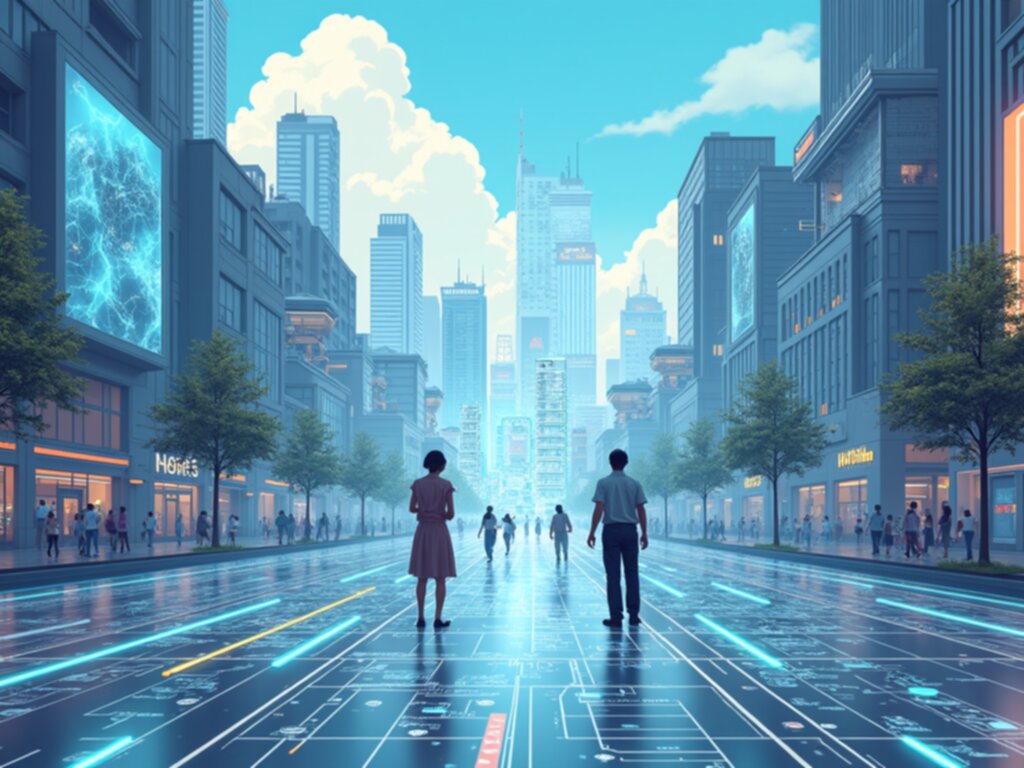
Look, we hear the term "walkable cities" thrown around constantly, but what does that actually mean on the ground, centimeter by centimeter? Honestly, it all starts with flow: designing the street not for cars, but for the person carrying groceries or pushing a stroller. Think about the mechanics of safety; we aren't just talking about speed limits, right? For example, implementing curb extensions—those bulb-outs at intersections—can empirically shorten a crossing distance by a crucial 1.5 to 2 meters, dramatically cutting conflict points with turning traffic. And that sense of safety, bolstered by uniform lighting and those essential "eyes on the street" Jane Jacobs talked about, can boost pedestrian volumes in commercial areas by as much as 30%. But comfort matters too; maybe it's just me, but walking in 90-degree heat is miserable. That’s why having a continuous street canopy, providing just 50% shade coverage, has been linked to a five-degree Celsius drop in perceived surface temperature—a game changer for peak summer months. We also need to pause and reflect on connectivity: downtowns with tight street grids, where blocks average 100 to 150 meters, see a 15% higher pedestrian mode share than those areas clogged up with massive superblocks. It's about accessibility, too; implementing tactile paving indicators at transit stops demonstrably reduces tripping incidents for the visually impaired by around 40%. We can't forget the immediate environment either, because if you can't pass someone comfortably, you won't walk there. That means ensuring a clear sidewalk width of at least 2.4 meters, especially in dense areas, so two people can walk side-by-side without dodging street furniture. Here’s what I mean: tie all this together with mixed-use zoning that places essential retail within 400 meters of homes, and you immediately see a 25% increase in non-motorized trips for daily errands.
The Art of Placemaking: Fostering Identity, Equity, and Community Interaction
Look, we talk a lot about building things, but placemaking? That’s where the real alchemy happens, turning concrete and steel into somewhere you actually *want* to be. Think about it this way: we aren't just stacking buildings; we're trying to create those spots where you bump into a neighbor and actually stop to chat instead of just scurrying past. You know that moment when you walk into a square and it just *feels* right? That feeling, that identity, is what we’re engineering. If we put up some generic statue, satisfaction ratings barely budge, but when we use public art that actually means something to the folks there, satisfaction jumps by 60%. And here’s the kicker about equity: if you design seating and access for *everyone*, those feelings of being left out—social exclusion—drop by almost 22% in those areas. Honestly, it’s wild how physical space affects our biology; I saw a study showing that well-designed places reduced people's stress hormone levels by 15% just by being there. We need to stop dropping pre-fab features into communities and start collaborating because neighborhoods that help design their own spaces stick with maintaining them 35% better long-term. And when we get the furniture placement right—making it easy for unrelated people to actually sit near each other—they stay 45% longer. Ultimately, this design work has a bottom line: those vibrant spots see local retail sales jump about 18% within two years, proving people spend money where they feel connected.
Integrating Green Infrastructure: Designing for Climate Resilience and Environmental Sustainability
And look, when we talk about climate resilience in city design, we're really talking about making nature do the heavy lifting, which I find fascinating. Think about bioretention cells, or rain gardens if you prefer the friendlier term; these little spots can clean up 80% to 90% of the gunk—the suspended solids—from stormwater runoff before it ever hits a stream, which is a massive win for local water quality. Then there are green roofs, those with about 10 to 15 centimeters of soil mix, because they actually lower a building's cooling needs by up to a quarter in the summer just by sweating off the heat. It’s not just about heat, though; research shows that a good urban tree canopy pulls down between 4 and 12 kilograms of fine particulate matter per hectare every year, giving us cleaner air right where we breathe it most. But let's talk about the rain we *can't* avoid; engineered permeable pavement is designed to soak up the first 25 millimeters of any storm, which, believe it or not, handles most of our typical rain events and keeps the sewers from backing up. Maybe it’s just me, but I hate traffic noise, and that’s where vertical green walls come in, acting like natural sound blankets that can knock down street noise by 5 to 10 decibels, especially those annoying high-pitched sounds. When we put all this interconnected green stuff in place, we see property damage claims from localized flooding drop by about 15% in those areas compared to old concrete jungles. And here’s the secret sauce: even small patches, like a bioswale or a tiny pocket park, can support 20% to 40% of our local native pollinators if we choose the right, local plants. It's about building systems that work *with* nature, not against it, to keep our cities drier, cooler, and quieter.
From Blueprint to Reality: Policy Frameworks and Economic Drivers of Successful Urban Design
So, we've talked about walking and green stuff, but what actually makes the city council rubber-stamp these beautiful plans instead of kicking them back for being too expensive? Honestly, it comes down to the fine print—the policy frameworks that make or break a project before the first shovel hits the dirt. Look at Form-Based Codes, for example; municipalities that mandate a decent floor-area ratio, say 3.0 or more near transit stops, actually see utility maintenance costs drop by 35% over time because we're building denser, more efficiently. And you know how much parking adds to a project's price tag? When central areas ditch mandatory off-street parking, those new commercial builds get cheaper by a solid 12% to 15%, freeing up capital that should go toward better design, not just storing empty cars. But it's not just about saving money upfront; it’s about generating more later, which always gets the accountants’ attention. We've seen Tax Increment Financing districts generate property tax growth at two and a half times the rate of areas right next door over a decade—that’s a hard number to argue with when you're looking at the city budget. And if you want developers to actually give you what you asked for—like ground-floor retail that people can use—performance zoning works; demanding a 20% density bonus in exchange for those amenities gets you compliance over 90% of the time. Maybe it's just me, but I think the real future is using IoT sensors to see how people *actually* move, because designs based on real-time data hit traffic calming goals 40% better than old theoretical maps. Finally, when you mix uses—having homes, shops, and offices close together—vacancy rates during tough economic times dip by 30% compared to those dead, single-use zones, proving that robust policy drives real economic stability.