
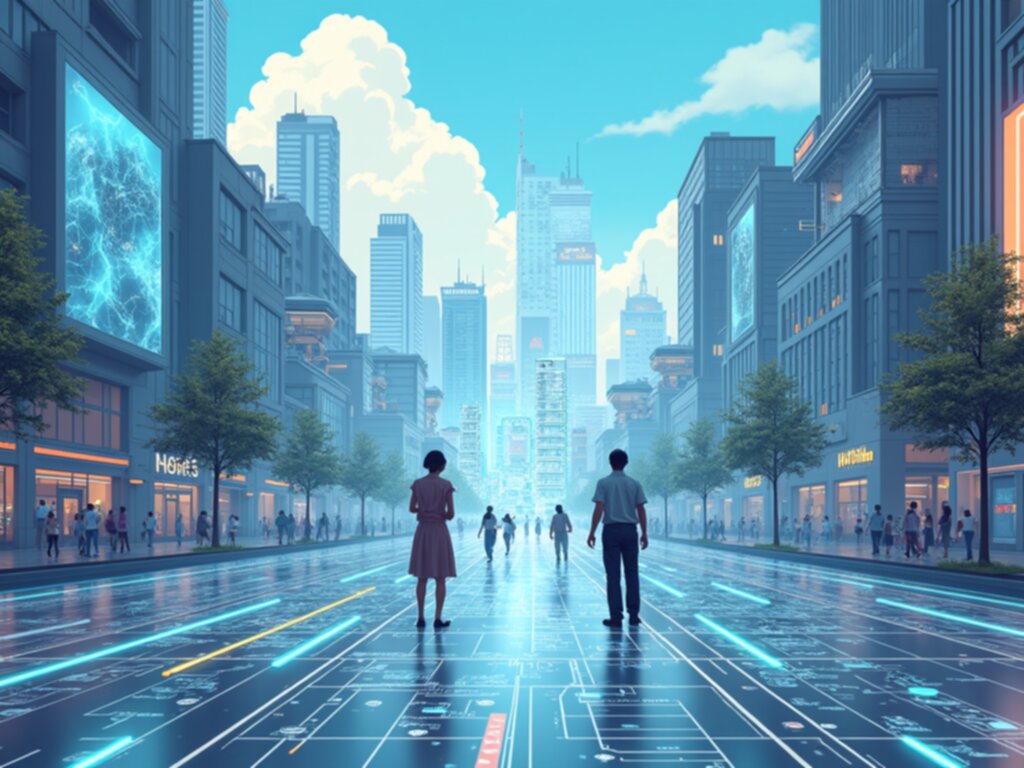
Transitioning from Car-Centric Infrastructure to the 15-Minute City Model
Look, we’ve all spent way too much of our lives staring at the brake lights of the car in front of us while just trying to grab a decent loaf of bread or get to the gym. It feels like we built our cities for engines rather than humans, but I’ve been looking at some recent data that suggests we're finally starting to flip the script. Think about it this way: if we just swap out 10% of that grey on-street parking for bioswales and micro-parks, we aren't just making things prettier; we're actually cutting localized flood risks by a massive 25%. And honestly, the shop owners should be thrilled because those same green strips are bumping up foot traffic by about 15%. I’m also
Leveraging Tactical Urbanism and Smart Data for Enhanced Pedestrian Safety
I’ve spent a lot of time lately digging into why some intersections feel like a death trap while others just work. It turns out, we don’t need a ten-year budget plan to make things safer right now; we just need some cheap paint and a bit of smart tech. I’m really fascinated by how AI video analytics can catch up to 50 near-miss moments for every actual crash, giving us a heads-up before someone actually gets hurt. Think about it: just by using bollards to clear parking spots within 20 feet of a corner—what the pros call daylighting—we’ve seen accidents drop by a solid 30% because drivers can finally see what's coming. And it’s not just about rules; even painting bright murals on
Implementing Universal Design Principles to Foster Social Equity and Accessibility
Honestly, we often talk about accessibility like it's just a checkbox for a building permit, but it's really about whether someone’s grandmother can walk to get coffee without feeling totally wiped out. You know that moment when you're rushing and the sidewalk just... ends, or there's a curb that feels like a mountain? It’s not just a "nice to have" either; tapping into the "Purple Pound"—the spending power of disabled households—can actually bump up local business activity by 25%. I’ve been looking at data showing that something as simple as high-contrast signage and haptic ground surfaces cuts the mental energy we all use to get around by about 15%. It just makes life easier for everyone. We've also got
Integrating Biophilic Green Corridors for Healthier and More Vibrant Communities
I've been thinking a lot lately about how we often treat city greenery like it’s just a bit of garnish on a plate, but these biophilic corridors are actually the hidden hard drive of a healthy neighborhood. It’s not just about planting a few trees; we're talking about creating these continuous veins of life that change our actual biology. I saw some data recently that really caught me off guard: people living near these diverse plant strips have healthier gut and skin bacteria, which is cutting immune-related diseases by 20% in just a couple of years. And honestly, think about those sweltering July afternoons when the asphalt feels like a furnace. By using vertical living walls, we can actually knock the local temperature down by 8 degrees Celsius, which is literally a