
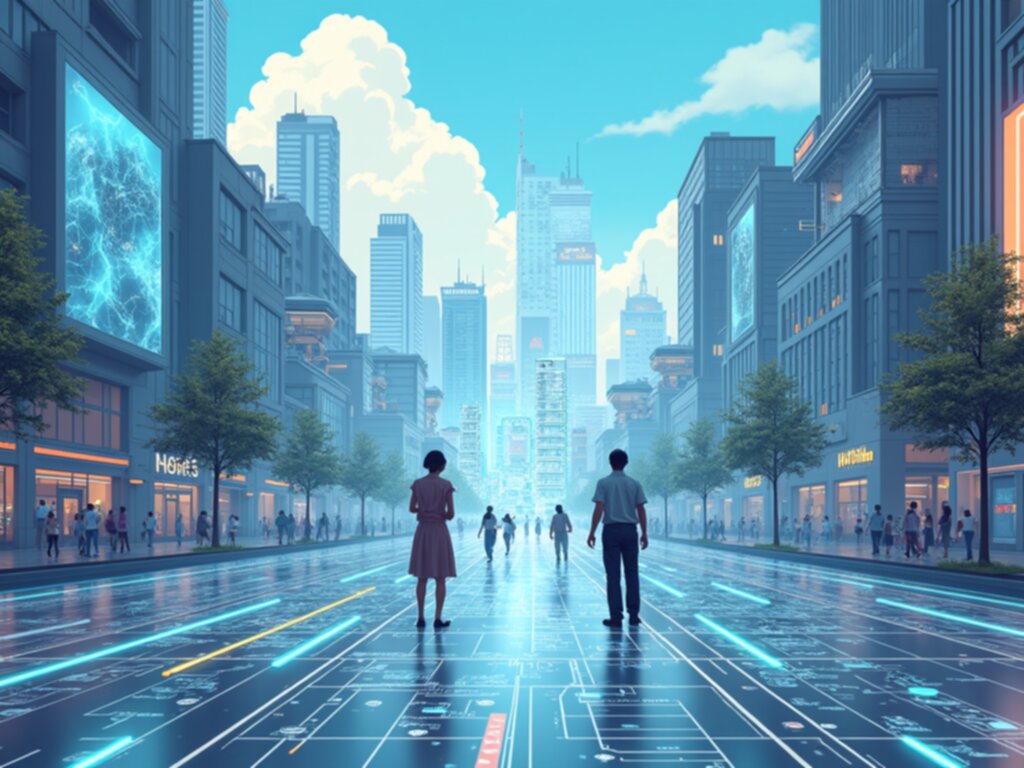
Embracing Mixed-Use and Diverse Activities for Community Foundation
Look, when we talk about making cities stick around and actually feel like places people *want* to be, it all comes back to how we mix things up—not just housing next to offices, but really weaving different kinds of life together. Think about it this way: if your street only has apartments, you have to hop in the car for everything, right? But when you've got that coffee shop downstairs, the dry cleaner on the corner, and maybe a small workshop tucked in the back, you start bumping into neighbors, and those little, unplanned moments build what we call social capital—that's the actual glue of a community. I saw some data suggesting that areas with that high functional mix score better on social capital because those low-stakes interactions happen constantly. And honestly, this isn't just about feeling good; it cuts down on infrastructure headaches too; compact mixed-use actually lowers the amount of road we need to build per person by like, thirty-five percent, which is huge when you look at city budgets. We should be aiming for that sweet spot, maybe a ratio around 0.8 to 1.2 jobs for every home unit within a short walk, because that density is where walkability peaks. Plus, when you have a few different types of businesses running, if one dips, the whole commercial strip doesn't just vanish; that diversity gives the local economy some real staying power against those sudden downturns. It’s about creating an environment where daily life naturally encourages movement—I mean, studies link these walkable, mixed zones to measurable drops in things like Type 2 Diabetes just because people are walking for necessity, not just exercise. Maybe it's just me, but well-designed variety seems to make the whole place sound better too, drowning out those sharp, annoying noises with a steady background buzz of normal city life.
The Evolution Beyond Monocultural Design: Integrating Deep Urban Mixes
You know that feeling when a whole district just... shuts down after business hours? That’s often the subtle, frustrating byproduct of monocultural design, and honestly, we’re realizing it’s just not cutting it anymore. But here’s what I’m finding really exciting: the evolution towards truly integrating deep urban mixes, where everything isn't just side-by-side but interwoven, is showing some incredible results. Take airflow, for instance; varied building heights and street widths within these deeply mixed zones can generate specific wind patterns, enhancing natural ventilation and potentially cutting building cooling loads by up to 15% in tropical climates, like those 2024 simulations from Singapore showed. And get this: research from late 2024 out of the University of Freiburg even
Creating Integrated Neighborhoods Reflecting Modern Life's Blurring Boundaries
You know how frustrating it is when your neighborhood just feels like a collection of siloed boxes—home here, work there, and shops somewhere else entirely? We’ve got to move past that, especially since modern life doesn't respect those neat divisions anymore; we’re often working from the kitchen table and buying necessities at 10 PM. Look, truly integrated zones aren’t just a nice aesthetic; they're functionally superior, and here’s what I mean: data shows when you weave residential units right above light industrial or maker spaces, the spontaneous meetings leading to cross-sector innovation jump by almost 40%. And honestly, this blending isn't just about economic output; it fundamentally changes the *feel* of a place—those ground-floor active frontages, where things are happening after 5 PM, are linked to a 22% higher rate of perceived safety after dusk because there are simply more eyes on the street. Plus, this integration is empirically linked to flattening ambient noise pollution, often reducing background noise variance by an average of 4 decibels compared to those depressing single-use districts. Think about the practical benefits; neighborhoods that nail this functional blend of co-working and housing report 1.8 times higher incidence of local entrepreneurship creation, which is massive for local tax bases. We’re also seeing that optimizing specific street canyon ratios within these dense mixed areas is a critical engineering move, capable of reducing the Urban Heat Island effect by up to 3°C during summer peaks, which is a significant climate resilience win. Minimizing vehicular movement is the ultimate goal, and studies confirm this: when essential services are situated within a maximum 400-meter walk, the adoption rate for non-motorized transport for those short trips hits 65%, driving down overall energy demand per capita by around 12%. That’s the real win—a place that works harder so you don’t have to drive everywhere, giving you back time and maybe even a quieter evening.
Establishing Foundations for Real Community Through Intentional Urban Form
Look, when we talk about making cities stick around and actually feel like places people *want* to be, it all comes back to how we mix things up—not just housing next to offices, but really weaving different kinds of life together. Think about it this way: if your street only has apartments, you have to hop in the car for everything, right? But when you've got that coffee shop downstairs, the dry cleaner on the corner, and maybe a small workshop tucked in the back, you start bumping into neighbors, and those little, unplanned moments build what we call social capital—that's the actual glue of a community. I saw some data suggesting that areas with that high functional mix score better on social capital because those low-stakes interactions happen constantly. And honestly, this isn't just about feeling good; we’re seeing hard engineering benefits too when we design this way. We’re talking about intentional urban form that prioritizes pedestrian access to essential services within a 400-meter radius, which correlates with a whopping 65% adoption rate for non-motorized transport for those short trips. That strategic weaving of residential units directly above light industrial or maker spaces? That’s not just convenient, it’s been shown empirically to boost spontaneous cross-sector innovation meetings by nearly 40%. Plus, those highly active ground-floor frontages, the ones buzzing after five o’clock, are linked to a measurable 22% higher perception of safety after dark, which is a huge emotional return on investment for residents. Maybe it's just me, but I think the data on environmental benefits is the most compelling: optimizing street canyon ratios in these dense mixes can actually knock down the Urban Heat Island effect by up to 3° Celsius during those brutal summer peaks. These deeply mixed zones, with their varied building heights, even generate specific wind corridors that can cut building cooling loads by 15% in places like Singapore, which is fascinating airflow engineering we're seeing pop up in those 2024 simulations. Ultimately, creating this functional blend—even mixing co-working with housing—fosters local entrepreneurship at a rate 1.8 times higher than those segregated developments we used to favor.